Vedic astrology, traditionally known as Jyotish (which translates to “the science of light”), is an ancient Indian system of astrology that dates back thousands of years. It originates from the Vedas, the sacred texts of ancient India.
Unlike Western astrology, which is highly popular in modern magazines and apps, Vedic astrology is deeply rooted in astronomical calculations, karma, and the belief that the macrocosm (the universe) directly mirrors the microcosm (the individual).
3 Core Differences From Western Astrology
If you are familiar with your Western zodiac sign, you might be surprised to find that your Vedic sign is often entirely different. Here is why:
1. The Sidereal vs. Tropical Zodiac
- Western Astrology uses the Tropical zodiac, which is fixed to the seasons. It assumes the Sun returns to the exact same point on the spring equinox every year.
- Vedic Astrology uses the Sidereal zodiac, which aligns with the actual, observable positions of the constellations in the sky right now. Because of the Earth’s slight wobble on its axis (a phenomenon called the precession of the equinoxes), the two systems drift apart by roughly 1 day every 72 years. Today, they are about 24 degrees apart, meaning your Vedic sun sign will often move back by one full zodiac sign.
2. The Moon Takes Center Stage
While Western astrology heavily emphasizes your Sun sign (representing your ego and outer personality), Vedic astrology prioritizes your Moon sign (representing your mind, emotions, and subconscious) and your Ascendant (the rising sign at your exact moment of birth).
3. Nakshatras (Lunar Mansions)
Vedic astrology divides the zodiac into 12 standard signs, but it goes a step deeper by splitting it into 27 Nakshatras or lunar mansions. Each day, the Moon travels through a different Nakshatra, adding intense precision and nuance to a person’s birth chart.
How It Works: The Kundali (Birth Chart)
In Vedic tradition, an astrologer maps out the exact snapshot of the sky at the millisecond of your birth to create a chart called a Kundali.
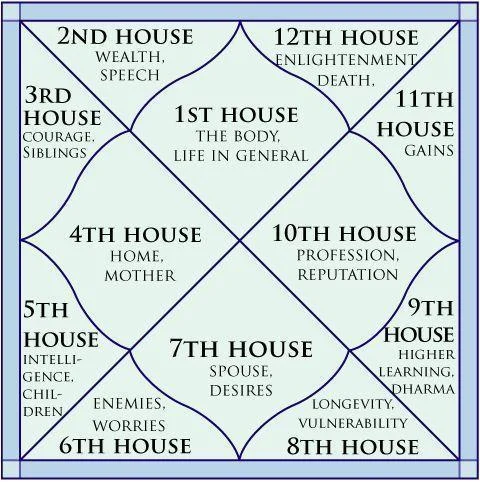
The chart layout is structured into 12 houses, with each house representing a distinct area of human life:
- 1st House: Self, physical body, and life path.
- 4th House: Home, mother, and inner happiness.
- 7th House: Relationships, marriage, and partnerships.
- 10th House: Career, reputation, and public life.
Dashas: The Cosmic Timing System
One of the most unique elements of Vedic astrology is its predictive system, called Dashas.
Instead of looking only at daily planetary movements (transits), a Vedic chart calculates a personalized timeline of planetary ruling periods. For example, you might enter a 16-year “Jupiter Dasha” focused on learning and growth, followed by a 19-year “Saturn Dasha” focused on discipline and hard work. This explains why certain periods of life feel completely different from others, regardless of your general horoscope.